Actor

raj kapoor
Actor

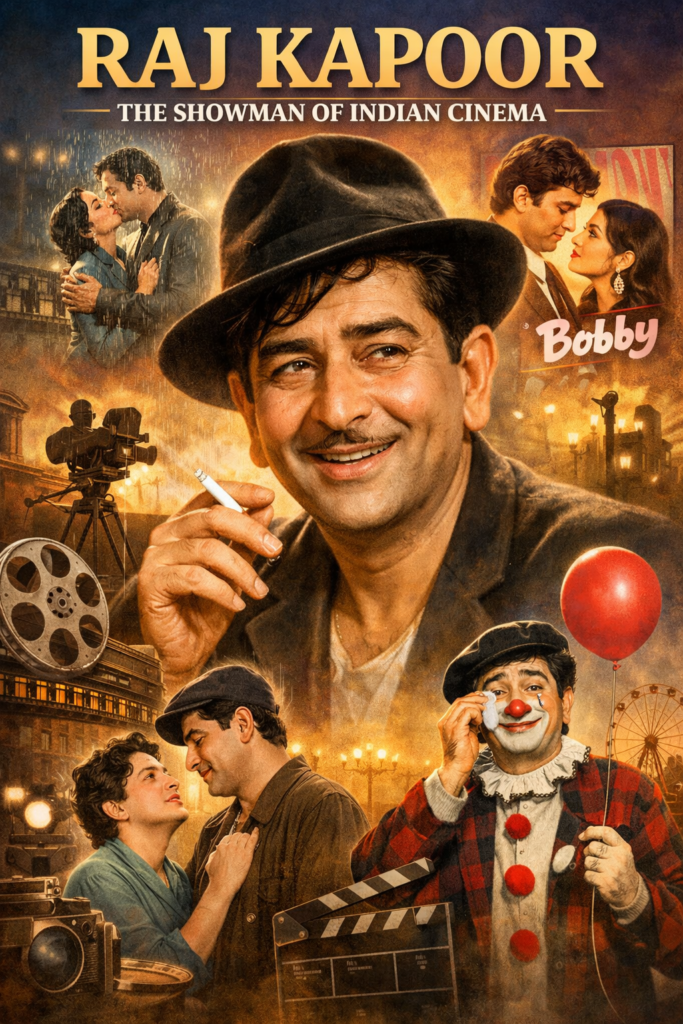
Raj Kapoor: The Showman Who Shaped Indian Cinema

Discover the life, legacy, and cinematic brilliance of Raj Kapoor, the legendary showman of Indian cinema. Explore his iconic films, influence, and timeless contribution to Bollywood. Introduction Few names in Indian cinema command the reverence and admiration that Raj Kapoor does. Often hailed as “The Showman of Bollywood,” Raj Kapoor was more than just an actor—he was a visionary filmmaker, producer, and storyteller who redefined the emotional and artistic landscape of Indian cinema. From his unforgettable performances to his groundbreaking direction, Kapoor’s influence continues to echo through generations of filmmakers and movie lovers alike. Early Life and Background Raj Kapoor was born on December 14, 1924, in Peshawar (now in Pakistan), into a family deeply rooted in theatre and performance. He was the son of Prithviraj Kapoor, a pioneer of Indian theatre and cinema. Growing up in such an environment, Raj Kapoor was naturally drawn toward the world of acting and storytelling. Despite his privileged exposure, his journey was not handed to him easily. He started from the ground up—working as a clapper boy in film studios before eventually stepping into acting roles. This hands-on experience shaped his understanding of cinema from both technical and emotional perspectives. Rise to Stardom Raj Kapoor made his acting debut as a lead in Neel Kamal (1947), but it was his directorial debut, Aag, that showcased his creative ambition. However, true stardom came with Barsaat, which established him as a leading actor and filmmaker. In 1948, at just 24 years old, he founded RK Films, making him one of the youngest film directors in India. This studio would go on to produce some of the most iconic films in Bollywood history. The Tramp Persona and Global Appeal Raj Kapoor is often compared to Charlie Chaplin, and rightly so. His portrayal of the lovable underdog—the poor but kind-hearted man navigating a harsh world—resonated deeply with audiences. Films like Shree 420 and Awara immortalized this “tramp” persona. Awara, in particular, became a massive international success, especially in countries like the Soviet Union and China. Kapoor’s ability to blend social commentary with entertainment gave his films a universal appeal. Iconic Films and Storytelling Genius Raj Kapoor’s filmography is filled with masterpieces that continue to be celebrated for their storytelling, music, and emotional depth. Some of his most notable works include: His films often featured memorable music composed by the legendary duo Shankar–Jaikishan, with lyrics by Shailendra and Hasrat Jaipuri. Songs were not just add-ons—they were integral to the narrative. Collaboration and On-Screen Chemistry . Their on-screen chemistry became legendary, especially in films like Awara and Shree 420. Together, they created some of the most iconic romantic moments in Indian cinema. Kapoor also played a crucial role in launching and nurturing talent. His film Bobby introduced Rishi Kapoor and Dimple Kapadia, marking a new era of youthful romance in Bollywood. Themes and Cinematic Style Raj Kapoor’s films often revolved around themes of social justice, love, poverty, and human dignity. He had a unique ability to present serious issues in an entertaining format, making them accessible to the masses. His storytelling style was deeply influenced by realism, yet he never shied away from grandeur. Lavish sets, emotionally charged performances, and melodious music were hallmarks of his cinema. He believed that films should not only entertain but also provoke thought and empathy. Challenges and Comebacks Despite his immense success, Raj Kapoor faced significant setbacks. Mera Naam Joker, one of his most ambitious projects, failed commercially upon release, causing a major financial crisis for RK Films. However, Kapoor made a remarkable comeback with Bobby, which became a blockbuster and revived his production house. This resilience demonstrated his unwavering belief in his craft and audience. Awards and Recognition Raj Kapoor received numerous accolades throughout his career. He was honored with the Dadasaheb Phalke Award, recognizing his lifetime contribution to Indian cinema. He also received several Filmfare Awards and international recognition for his work. In 1988, he was awarded the Padma Bhushan, one of India’s highest civilian honors. Legacy and Influence Raj Kapoor’s legacy is deeply embedded in the fabric of Indian cinema. His influence can be seen in the works of countless filmmakers who followed. Directors like Rajkumar Hirani and actors across generations have drawn inspiration from his storytelling techniques and emotional depth. The Kapoor family continues to be a dominant force in Bollywood, with multiple generations contributing to the industry. RK Films remains a symbol of cinematic excellence. Conclusion Raj Kapoor was not just a filmmaker—he was a storyteller who understood the pulse of the people. His films transcended language and geography, touching hearts across the world. Whether it was the innocence of his characters or the depth of his narratives, Kapoor created a cinematic universe that remains timeless. Even decades after his passing in 1988, Raj Kapoor’s work continues to inspire, entertain, and educate. He truly earned the title of “The Showman,” leaving behind a legacy that will forever shine in the history of Indian cinema. Narendra Modi: Leadership, Vision, and Transformation of Modern India
anushka sharma
Actor

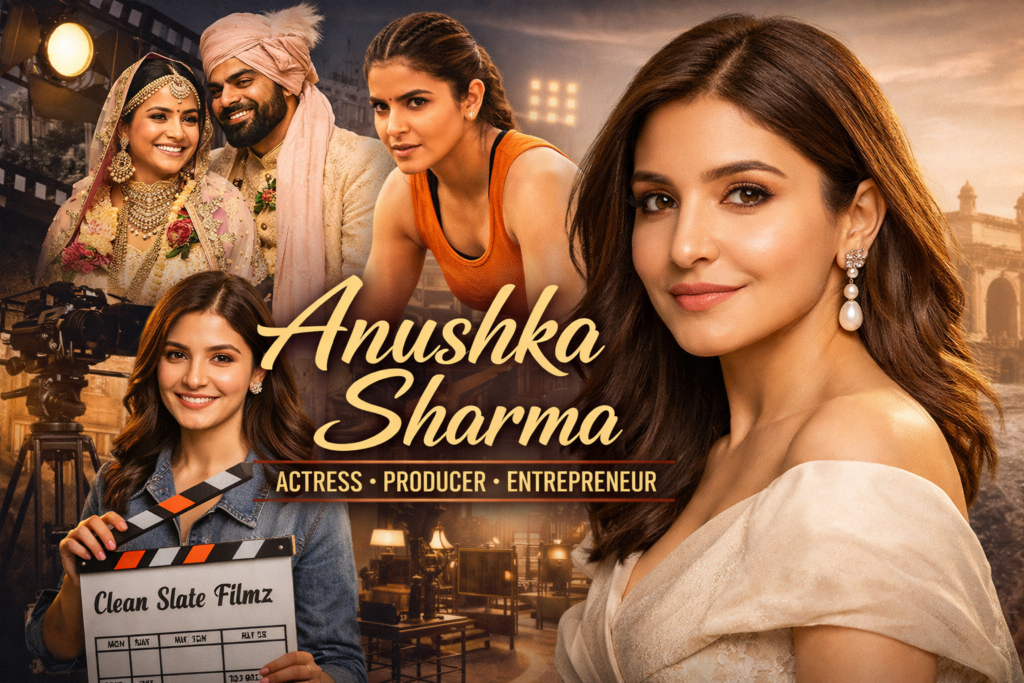
Anushka Sharma: From Modeling Star to Bollywood Powerhouse and Entrepreneur-2026

Explore the inspiring journey of Anushka Sharma—Bollywood actress, producer, and entrepreneur. Discover her career, achievements, personal life, and business ventures in this SEO-optimized blog. Introduction Anushka Sharma is one of the most influential and versatile personalities in the Indian entertainment industry. From her early days as a model to becoming a leading Bollywood actress and successful producer, she has built a remarkable career defined by talent, determination, and bold choices. Known for her strong screen presence and unconventional film roles, Anushka Sharma has consistently pushed boundaries in an industry often driven by stereotypes. This article explores her journey, achievements, and impact, offering a comprehensive look at how she evolved into a powerhouse performer and entrepreneur. Early Life and Background Anushka Sharma was born in Ayodhya, Uttar Pradesh, India, on May 1, 1988. Raised in Bangalore, she comes from a non-film background, which makes her success even more inspiring.  Growing up in a disciplined environment shaped her personality, instilling confidence and resilience. Before entering the film industry, Anushka pursued a career in modeling. She moved to Mumbai to chase her dreams and quickly gained recognition in the fashion world. Her modeling career laid the foundation for her entry into Bollywood. Bollywood Debut and Breakthrough Anushka Sharma made her acting debut in 2008 with the blockbuster film Rab Ne Bana Di Jodi opposite Shah Rukh Khan. Despite being a newcomer, she delivered a confident performance that won the hearts of audiences and critics alike. The film’s success catapulted her into the spotlight, making her one of the most promising new faces in Bollywood. Her natural acting style and ability to portray relatable characters set her apart from many contemporaries. Unlike traditional glamorous roles, Anushka often chose characters with depth and individuality. Rise to Stardom Following her debut, Anushka Sharma starred in several successful films that showcased her versatility. Movies like Band Baaja Baaraat, Jab Tak Hai Jaan, PK, and Sultan solidified her position as a leading actress in the Indian film industry. In Band Baaja Baaraat, she played a spirited wedding planner, earning critical acclaim for her energetic performance. Her role in PK alongside Aamir Khan demonstrated her ability to balance humor with emotional depth. Meanwhile, Sultan highlighted her dedication, as she underwent intense physical training to portray a wrestler. Anushka’s film choices reflect her willingness to experiment, whether it’s romantic dramas, comedies, or socially relevant films. Venturing into Film Production One of the most defining aspects of Anushka Sharma’s career is her move into film production. She co-founded the production company Clean Slate Filmz, aiming to create meaningful and unconventional content. Her debut production NH10 was a bold thriller that broke away from mainstream Bollywood formulas. The film received widespread appreciation for its gripping storyline and strong female lead. She continued to produce critically acclaimed projects like Phillauri, Pari, and the web series Paatal Lok. Through her production house, Anushka has supported fresh storytelling and new talent, contributing significantly to the evolution of Indian cinema. Acting Style and Unique Appeal Anushka Sharma’s acting style is often described as natural, expressive, and relatable. She has a unique ability to connect with audiences, making her characters believable and memorable. Unlike many actors who rely heavily on glamour, Anushka focuses on performance-driven roles. Her confidence and authenticity have made her a role model for aspiring actors. She is known for speaking her mind and taking a stand on important issues, both within and outside the film industry. Personal Life and Public Image Anushka Sharma married Indian cricketer Virat Kohli in 2017, forming one of the most celebrated celebrity couples in India. Their relationship has been widely admired for its mutual respect and support. Despite being constantly in the public eye, Anushka has managed to maintain a balanced personal and professional life. She is also known for her advocacy of animal rights and environmental causes, often using her platform to raise awareness. Her down-to-earth personality and candid nature have helped her maintain a positive public image. Business Ventures and Entrepreneurship Apart from acting and production, Anushka Sharma has also ventured into entrepreneurship. She launched her clothing brand Nush, which reflects her personal style—comfortable, chic, and modern. Her entrepreneurial journey demonstrates her versatility beyond acting. She has successfully built a brand identity that resonates with young audiences, further expanding her influence. Awards and Achievements Over the years, Anushka Sharma has received numerous awards and nominations for her performances. While awards are a testament to her talent, her real achievement lies in consistently choosing impactful roles and contributing to meaningful cinema. She has also been featured in various lists of influential celebrities, highlighting her impact not just as an actress but as a cultural icon. Challenges and Comebacks Like any successful individual, Anushka Sharma has faced challenges in her career. Some of her films did not perform well at the box office, and she has been subject to criticism and scrutiny. However, her ability to bounce back stronger reflects her resilience. Instead of playing it safe, she continues to take risks, which is a rare quality in the entertainment industry. Her journey serves as an inspiration for anyone striving to succeed despite setbacks. Impact on Bollywood Anushka Sharma has played a significant role in changing the narrative for female actors in Bollywood. By choosing strong, independent characters and producing content-driven films, she has helped shift the focus from traditional roles to more meaningful storytelling. Her work has encouraged other actors to explore production and invest in quality content. She represents a new generation of artists who prioritize creativity and authenticity over formulaic success. Conclusion Anushka Sharma’s journey from a small-town girl to a Bollywood superstar and successful entrepreneur is truly inspiring. Her career is a perfect blend of talent, hard work, and fearless decision-making. Whether it’s her impactful performances, innovative production ventures, or business initiatives, she continues to redefine success in the entertainment industry. Anushka Sharma is not just an actress—she is a trendsetter, a storyteller, and a symbol of modern Indian cinema. As she continues

salman khan
Actor

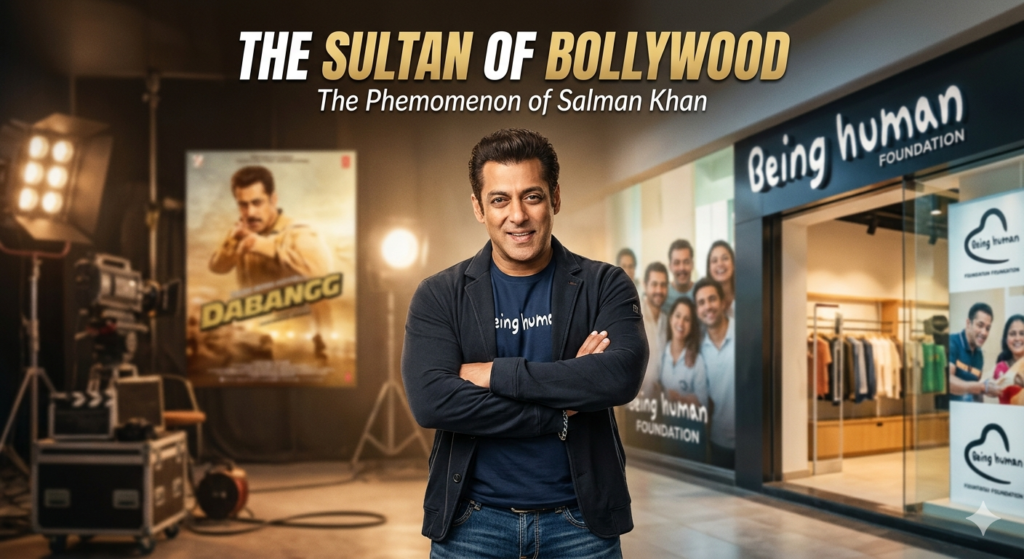
The Sultan of Bollywood: A Deep Dive into the Phenomenon of Salman Khan-2026 ( Bhaijaan)

Explore the iconic journey of Salman Khan—Bollywood superstar, producer, and philanthropist. Discover his rise to fame, legendary filmography, and impact through the Being Human Foundation. Introduction In the vast landscape of Indian cinema, few names command the sheer magnitude of adoration and influence as Salman Khan. Often referred to as “Bhaijaan” by his legion of fans, Salman is not just an actor; he is a cultural phenomenon. Spanning over three decades in the Hindi film industry, his journey is a remarkable tale of talent, resilience, transformation, and unparalleled stardom. Early Life and the Spark of Stardom Born on December 27, 1965, as Abdul Rashid Salim Salman Khan, he was destined for the spotlight. As the eldest son of the legendary screenwriter Salim Khan—the mastermind behind iconic classics like Sholay and Deewaar—Salman grew up surrounded by the creative buzz of Bollywood. Despite his pedigree, Salman charted his own path, making his acting debut in 1988 with a supporting role in Biwi Ho To Aisi. However, it was his 1989 breakout role in Sooraj Barjatya’s Maine Pyar Kiya that cemented his status as a nationwide heartthrob. The film was an “All-Time Blockbuster,” and the character of “Prem” became an iconic archetype that Salman would revisit multiple times throughout his career. The Evolution of an Icon Salman Khan’s career is marked by distinct phases, showcasing his ability to reinvent himself and connect with changing audience tastes. The 90s: The Romantic Hero The 1990s established him as the quintessential romantic lead. With massive hits like Hum Aapke Hain Koun..! (1994)—which remains one of the highest-grossing Indian films of all time—and Karan Arjun (1995), he became a household name. His chemistry with co-stars and his relatable charm allowed him to dominate the box office. The 2010s: The Action Superstar After a period of mixed success, Salman experienced a massive career resurgence in 2010 with Dabangg. Playing the role of the fearless, quirky cop “Chulbul Pandey,” he birthed a new trend in Bollywood: the larger-than-life, mass-appeal action spectacle. Following Dabangg, films like Ek Tha Tiger, Kick, and Sultan further fortified his reputation as the “Box Office King,” capable of single-handedly driving films to massive profits. Beyond the Silver Screen: The Philanthropist While his box-office records are legendary, perhaps the most defining aspect of Salman Khan’s public persona is his deep commitment to social work. In 2007, he established the Being Human Foundation, a charitable trust focused on healthcare and primary education for the underprivileged. Unlike many celebrity foundations, Being Human pioneered a unique model: a retail brand. By selling branded apparel and accessories, a portion of the profits directly funds the foundation’s initiatives. Key areas of impact include: This blend of celebrity influence and tangible social change has made Salman a beacon of hope for many, transcending the boundaries of “reel” life. The “Salman Khan Effect” and Behind-the-Scenes Facts What keeps fans so deeply invested in Salman? It is a mix of his raw, unscripted personality and his reputation for being the “industry’s big brother.” Here are a few lesser-known facts that highlight his unique persona: The Legacy of an Era Salman Khan’s journey is far from over. From a young romantic lead to an action icon and a dedicated humanitarian, his ability to stay relevant for over thirty years is a testament to his connection with the masses. While his career has seen its share of ups and downs, his impact on the cultural fabric of India is undeniable. He is a man of contradictions: a rugged action hero on screen and a deeply emotional, charitable individual off-screen. As he continues to choose projects that cater to the diverse and evolving tastes of Indian cinema audiences, “Bhaijaan” remains a symbol of entertainment, hope, and the enduring power of the Bollywood dream. Salman Khan Blackbuck (Deer) Case: Full Overview The Salman Khan blackbuck case is one of the most discussed legal controversies in Bollywood. The case dates back to 1998, during the shooting of the movie Hum Saath-Saath Hain in Rajasthan. Salman Khan, along with some co-stars, was accused of illegally hunting two blackbucks (an endangered species protected under Indian wildlife law) near Kankani village, Jodhpur. According to reports, members of the Bishnoi community, known for their strong commitment to wildlife protection, witnessed the alleged incident and filed complaints. The blackbuck holds special religious significance for the Bishnoi community, which made the case highly sensitive and widely followed across India. The legal proceedings lasted for nearly two decades. Salman Khan faced charges under the Wildlife Protection Act, 1972, which prohibits hunting protected animals. Over the years, several hearings, appeals, and court decisions took place. In April 2018, a Jodhpur court found Salman Khan guilty and sentenced him to five years in prison. However, he was granted bail after spending a short time in custody and later appealed the verdict. The case sparked major media attention and public debate. Supporters argued that the evidence was insufficient, while critics emphasized the importance of wildlife conservation and equal application of the law, regardless of celebrity status. Even today, the Salman Khan deer case remains a significant example of how environmental laws are enforced in India and how celebrity legal matters can influence public discussions on justice and conservation. It continues to attract attention whenever there are updates in court proceedings. Conclusion Salman Khan’s story is more than just box-office numbers or hit songs; it is the story of a man who embraced his stardom to build a legacy that gives back to society. Whether you view him through the lens of his high-octane action films or his grassroots charitable work, there is no denying that Salman Khan is, and will remain, one of the most significant pillars of Indian cinema. Samay Raina: The Comedian Who Made Chess Cool Again in 2026

shah rukh
Actor

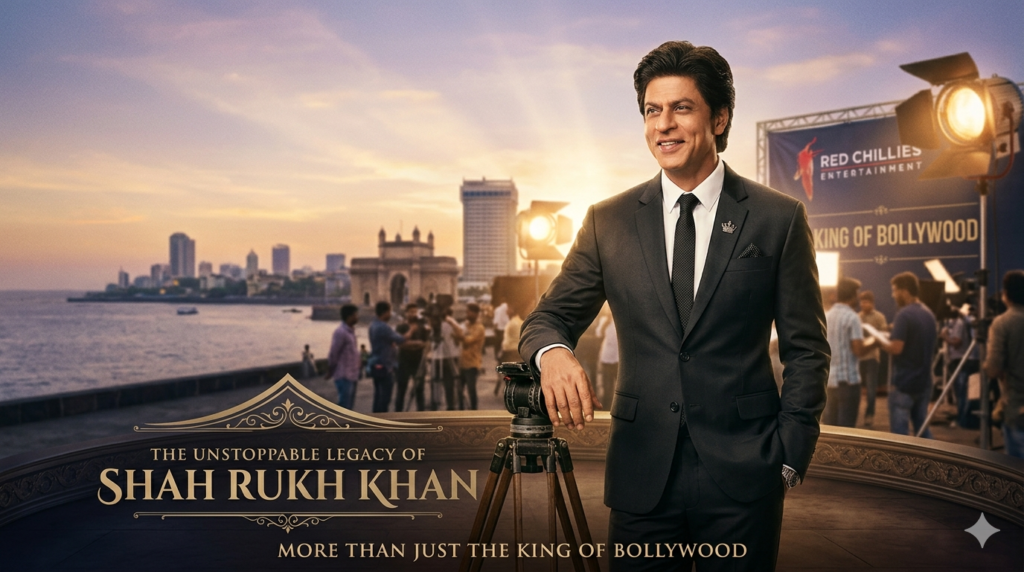
The Unstoppable Legacy of Shah Rukh Khan: More Than Just the King of Bollywood From 90s

Explore the extraordinary life and career of Shah Rukh Khan. Discover why he is crowned the King of Bollywood, his iconic film milestones, and his enduring global impact. Introduction In the vast landscape of Indian cinema, few names command the respect, adoration, and sheer global recognition of Shah Rukh Khan. Often referred to as “King Khan,” “The Baadshah of Bollywood,” or simply “SRK,” he is not merely an actor—he is a cultural phenomenon. From his humble beginnings in Delhi to his status as one of the world’s most successful and recognizable film stars, his journey is a masterclass in resilience, charisma, and hard work. The Early Days: From Theater to Television Born on November 2, 1965, in New Delhi, Shah Rukh Khan’s path to stardom was not paved with film industry connections. Growing up in a middle-class family, he showed early promise in theater under the guidance of Barry John at the Theatre Action Group (TAG) in Delhi. His entry into the spotlight began with television in the late 1980s. He captured the hearts of audiences with his breakout role as Commando Abhimanyu Rai in the television series Fauji (1988). His natural charm and intense screen presence quickly made him a household name, setting the stage for his transition to the silver screen. The Maverick Debut: Breaking the Traditional Mold While many actors of his generation sought the conventional path of the “romantic hero” from the start, SRK chose a different route. After his film debut in Deewana (1992), he took on daring, unconventional “anti-hero” roles in thrillers like Baazigar (1993) and Darr (1993). These performances were bold, psychological, and captivating. They proved that he wasn’t just a face; he was a serious actor capable of portraying complex shades of obsession and vulnerability. This willingness to take risks cemented his early reputation and provided the foundation for his future superstardom. The Rise of the Romantic Icon By the mid-1990s, the industry recognized his unique ability to embody passion and emotion. With the release of the iconic Dilwale Dulhania Le Jayenge (1995), Shah Rukh Khan redefined the romantic genre for Indian cinema. His portrayal of Raj Malhotra transformed the landscape of Bollywood romance, and the film famously became the longest-running movie in Indian cinema history. Throughout the late 90s and 2000s, SRK solidified his position with a string of massive hits, including: These films did more than generate box office revenue; they created a global emotional connection with the Indian diaspora and international audiences alike, making him an ambassador of Indian culture. Beyond Romance: The Versatile Artist To define Shah Rukh Khan solely by his romantic roles would be a disservice to his artistic range. Throughout his career, he has consistently stepped outside his comfort zone to deliver critically acclaimed performances in diverse genres: The Businessman and Global Philanthropist Shah Rukh Khan’s influence extends far beyond the studio. As an entrepreneur, he is the co-owner of Red Chillies Entertainment, a production house that has backed both his blockbusters and innovative, smaller-scale projects. Furthermore, his venture into cricket as the co-owner of the Kolkata Knight Riders (KKR) in the Indian Premier League (IPL) made him a major player in the sports business world. Beyond the boardroom, he is a dedicated philanthropist. Whether it is supporting children’s healthcare, contributing to AIDS and cancer relief, or his work in the Pulse Polio campaign, he has consistently used his platform to advocate for social change and education. The Resurgence: The King Still Reigns After a period of career reflection, 2023 marked an explosive comeback for SRK. With the massive success of action blockbusters like Pathaan and Jawan, he proved that his screen presence is more powerful than ever. These films not only shattered box office records but also demonstrated his ability to evolve and embrace the demands of modern, high-octane action cinema. Why We Still Love the King Why does the world continue to love Shah Rukh Khan after four decades? The answer lies in his authenticity. Whether he is giving a candid interview about dealing with failure, delivering an inspiring speech at a university, or sharing his wit on social media, he remains grounded. He once shared, “It’s okay to be confused. Confusion is the root to all the clarity in the world.” Such reflections show that behind the glamour, he is a philosopher who values empathy and learning. He understands that in a polarized world, the ability to listen and see another person’s truth is his greatest strength. Shah Rukh Khan is not just a performer; he is a bridge between generations. For those who grew up in the 90s, he represents the nostalgia of first love. For the younger generation, he represents the endurance of hard work and the importance of adapting to change. As he continues to work on new projects and push the boundaries of what Indian cinema can achieve, one thing is certain: the legacy of Shah Rukh Khan is far from finished. He continues to prove that with enough passion, self-belief, and hard work, one can truly rule the hearts of millions. M.S. Dhoni: The Legendary Captain Who Redefined Indian Cricket – 2026

Scroll to Top