Explore the iconic journey of Salman Khan—Bollywood superstar, producer, and philanthropist. Discover his rise to fame, legendary filmography, and impact through the Being Human Foundation.
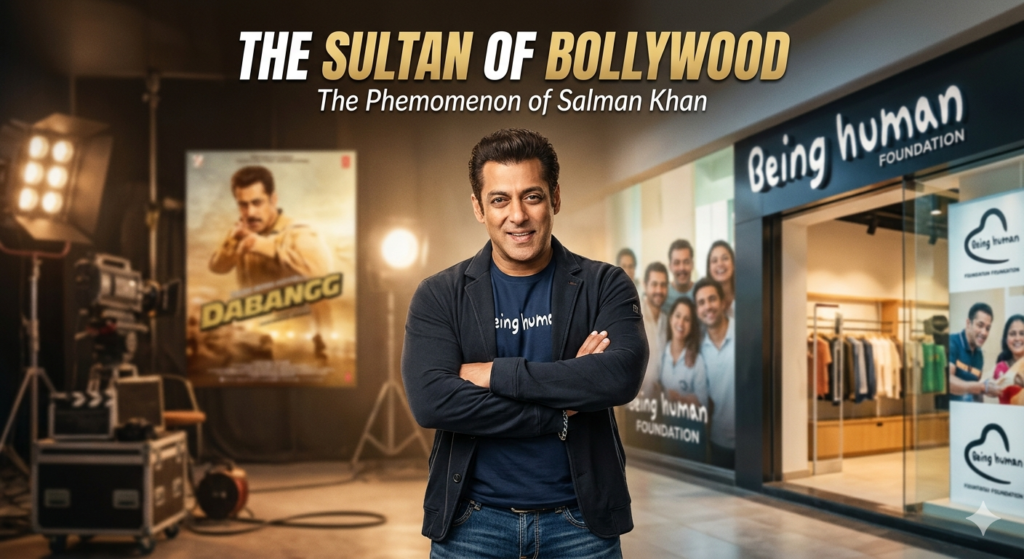
Introduction
In the vast landscape of Indian cinema, few names command the sheer magnitude of adoration and influence as Salman Khan. Often referred to as “Bhaijaan” by his legion of fans, Salman is not just an actor; he is a cultural phenomenon. Spanning over three decades in the Hindi film industry, his journey is a remarkable tale of talent, resilience, transformation, and unparalleled stardom.
Early Life and the Spark of Stardom
Born on December 27, 1965, as Abdul Rashid Salim Salman Khan, he was destined for the spotlight. As the eldest son of the legendary screenwriter Salim Khan—the mastermind behind iconic classics like Sholay and Deewaar—Salman grew up surrounded by the creative buzz of Bollywood. Despite his pedigree, Salman charted his own path, making his acting debut in 1988 with a supporting role in Biwi Ho To Aisi.
However, it was his 1989 breakout role in Sooraj Barjatya’s Maine Pyar Kiya that cemented his status as a nationwide heartthrob. The film was an “All-Time Blockbuster,” and the character of “Prem” became an iconic archetype that Salman would revisit multiple times throughout his career.
The Evolution of an Icon
Salman Khan’s career is marked by distinct phases, showcasing his ability to reinvent himself and connect with changing audience tastes.
The 90s: The Romantic Hero
The 1990s established him as the quintessential romantic lead. With massive hits like Hum Aapke Hain Koun..! (1994)—which remains one of the highest-grossing Indian films of all time—and Karan Arjun (1995), he became a household name. His chemistry with co-stars and his relatable charm allowed him to dominate the box office.
The 2010s: The Action Superstar
After a period of mixed success, Salman experienced a massive career resurgence in 2010 with Dabangg. Playing the role of the fearless, quirky cop “Chulbul Pandey,” he birthed a new trend in Bollywood: the larger-than-life, mass-appeal action spectacle. Following Dabangg, films like Ek Tha Tiger, Kick, and Sultan further fortified his reputation as the “Box Office King,” capable of single-handedly driving films to massive profits.
Beyond the Silver Screen: The Philanthropist
While his box-office records are legendary, perhaps the most defining aspect of Salman Khan’s public persona is his deep commitment to social work. In 2007, he established the Being Human Foundation, a charitable trust focused on healthcare and primary education for the underprivileged.
Unlike many celebrity foundations, Being Human pioneered a unique model: a retail brand. By selling branded apparel and accessories, a portion of the profits directly funds the foundation’s initiatives. Key areas of impact include:
- Healthcare: Partnering with hospitals to fund surgeries for children with congenital heart defects and providing aid for eye care.
- Education: Supporting non-profits and schools to provide free education to thousands of underprivileged children.
- Employment: The “Veer” initiative, which trains differently-abled individuals for employment, ensuring they can lead independent lives.
This blend of celebrity influence and tangible social change has made Salman a beacon of hope for many, transcending the boundaries of “reel” life.
The “Salman Khan Effect” and Behind-the-Scenes Facts
What keeps fans so deeply invested in Salman? It is a mix of his raw, unscripted personality and his reputation for being the “industry’s big brother.” Here are a few lesser-known facts that highlight his unique persona:
- Directorial Influence: Known for his ad-libbing style, Salman often skips over-rehearsing lines, preferring to bring a natural, spontaneous energy to his scenes.
- Fitness Pioneer: Long before the current Bollywood fitness obsession, Salman was the trendsetter. His dedication to bodybuilding has inspired generations of Indian youth.
- The Artistic Side: Few know that Salman is an accomplished painter. His artworks are often auctioned to raise funds for his charitable causes.
- Loyalty: He is renowned in the industry for standing by his friends and helping newcomers find their footing, often using his influence to support colleagues in times of need.
The Legacy of an Era
Salman Khan’s journey is far from over. From a young romantic lead to an action icon and a dedicated humanitarian, his ability to stay relevant for over thirty years is a testament to his connection with the masses. While his career has seen its share of ups and downs, his impact on the cultural fabric of India is undeniable.
He is a man of contradictions: a rugged action hero on screen and a deeply emotional, charitable individual off-screen. As he continues to choose projects that cater to the diverse and evolving tastes of Indian cinema audiences, “Bhaijaan” remains a symbol of entertainment, hope, and the enduring power of the Bollywood dream.
Salman Khan Blackbuck (Deer) Case: Full Overview
The Salman Khan blackbuck case is one of the most discussed legal controversies in Bollywood. The case dates back to 1998, during the shooting of the movie Hum Saath-Saath Hain in Rajasthan. Salman Khan, along with some co-stars, was accused of illegally hunting two blackbucks (an endangered species protected under Indian wildlife law) near Kankani village, Jodhpur.
According to reports, members of the Bishnoi community, known for their strong commitment to wildlife protection, witnessed the alleged incident and filed complaints. The blackbuck holds special religious significance for the Bishnoi community, which made the case highly sensitive and widely followed across India.
The legal proceedings lasted for nearly two decades. Salman Khan faced charges under the Wildlife Protection Act, 1972, which prohibits hunting protected animals. Over the years, several hearings, appeals, and court decisions took place. In April 2018, a Jodhpur court found Salman Khan guilty and sentenced him to five years in prison. However, he was granted bail after spending a short time in custody and later appealed the verdict.
The case sparked major media attention and public debate. Supporters argued that the evidence was insufficient, while critics emphasized the importance of wildlife conservation and equal application of the law, regardless of celebrity status.
Even today, the Salman Khan deer case remains a significant example of how environmental laws are enforced in India and how celebrity legal matters can influence public discussions on justice and conservation. It continues to attract attention whenever there are updates in court proceedings.
Conclusion
Salman Khan’s story is more than just box-office numbers or hit songs; it is the story of a man who embraced his stardom to build a legacy that gives back to society. Whether you view him through the lens of his high-octane action films or his grassroots charitable work, there is no denying that Salman Khan is, and will remain, one of the most significant pillars of Indian cinema.